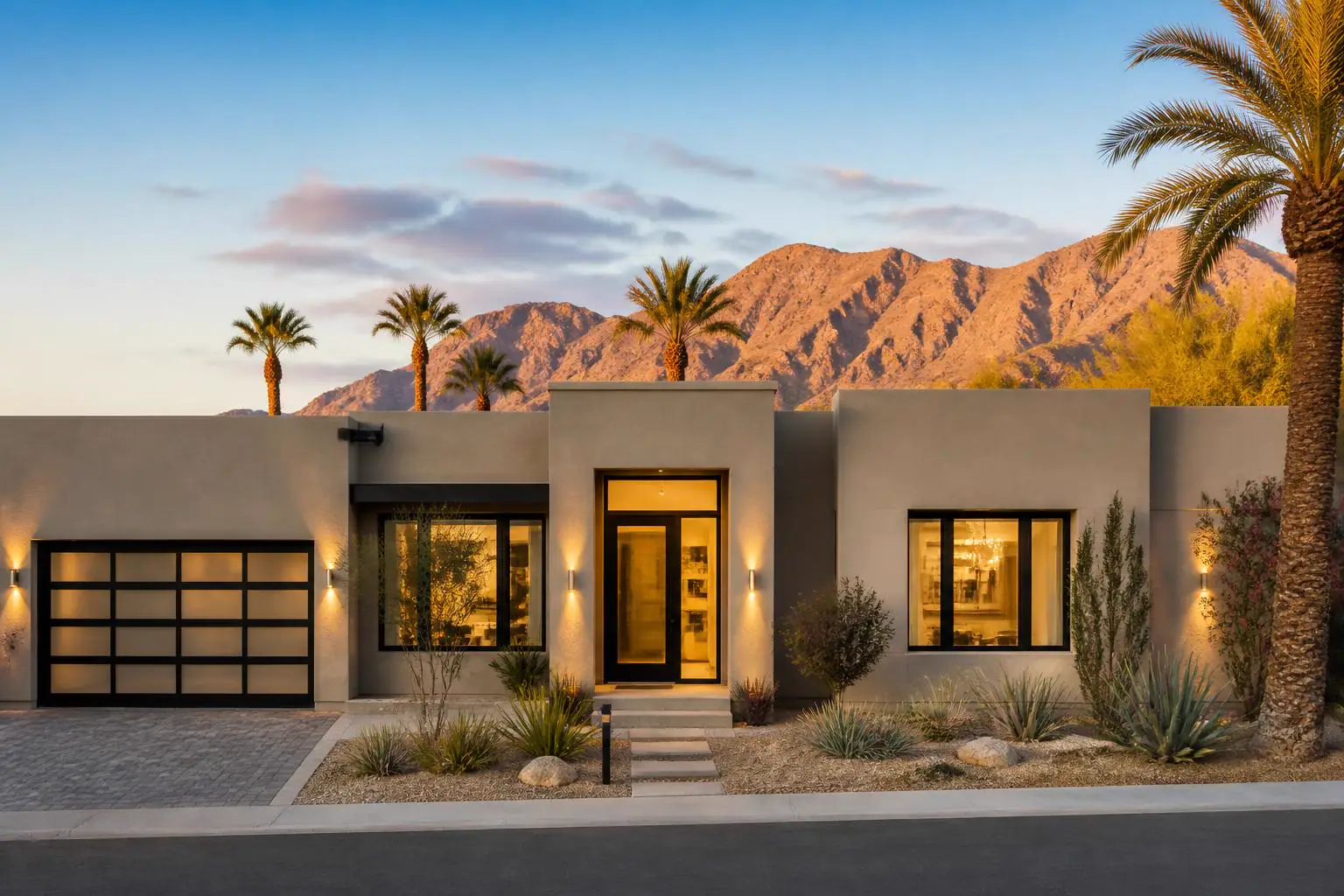
Dual pane vs triple pane in a 115° desert.
Everything written about window glass online is written for cold climates. Here the enemy is radiant sun, not escaping heat — which changes the answer. This is how we actually spec glass for Las Vegas homes, elevation by elevation.
Have someone map your glass by elevation
Takes 30 seconds. A real person calls you back — usually within the hour.
The short answer
For west- and south-facing glass in Las Vegas, triple-pane wins — those elevations take direct radiant sun for hours and the extra chamber plus the third coated surface is what stops it. On shaded north-facing openings, a properly specified dual-pane unit gets you most of the way for less.
Pane count is not the number to shop on. SHGC at or below 0.25 and U-factor at or below 0.30 matter more than how many pieces of glass are in the unit.
- Target SHGC
- 0.25 or lower
- Target U-factor
- 0.30 or lower
- Triple-pane premium
- 15-30%
Why the standard advice is wrong for the Mojave
Almost every window comparison you'll read was written for Minneapolis or Buffalo. In those markets the question is how fast heat escapes through the glass in January, so U-factor and pane count dominate the conversation.
Las Vegas has the opposite problem for seven months a year. The load is radiant: direct sun landing on glass and re-radiating into your living room while the air conditioner tries to keep up. The number that governs that is SHGC — Solar Heat Gain Coefficient — and it is driven mostly by Low-E coatings, not by how many panes are stacked up.
So the honest answer is not "always triple-pane." It's "spec each elevation for the sun it actually gets." That's a measurement question, and it's why we walk every opening before quoting.
How the two compare in this climate
Typical performance for units we install in the Las Vegas Valley:
| Spec | Good dual-pane | Our triple-pane |
|---|---|---|
| Panes / gas chambers | 2 panes, 1 argon chamber | 3 panes, 2 argon chambers |
| Low-E coated surfaces | 1-2 surfaces | 3 surfaces |
| Typical SHGC | 0.25 - 0.32 | 0.18 - 0.24 |
| Typical U-factor | 0.28 - 0.32 | 0.20 - 0.24 |
| Sound reduction | Moderate | Noticeably better |
| Cost per window | $650 - $950 installed | $800 - $1,200 installed |
Ranges are for standard retrofit installations in the Las Vegas Valley. Your exact ratings appear on the NFRC label of the unit we quote, and your written price is itemized at the assessment.
How we decide, opening by opening
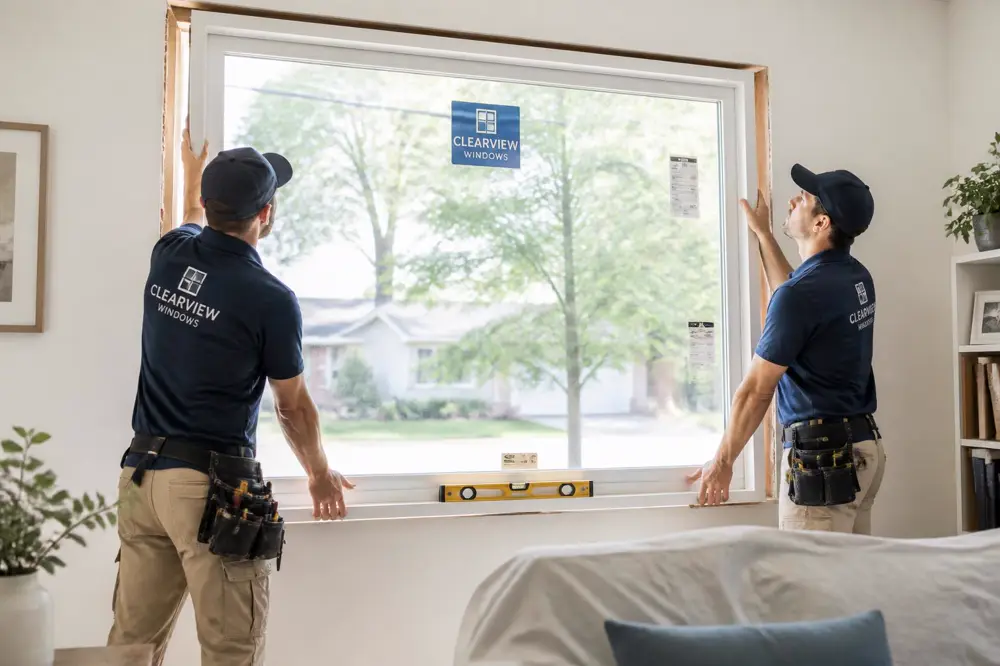
At the assessment we note the compass orientation of every window, what shades it (an overhang, a second story, a neighbor's wall, a mature tree), and what the room is used for. A west-facing bedroom window above a bare patio is a different problem than a north kitchen window under a deep eave.
Then we spec accordingly. Most valley homes end up as a mix, and the mix costs less than blanket triple-pane while performing about the same where it counts.
- West and southwest glass: triple-pane, lowest available SHGC
- South glass: triple-pane where unshaded, dual-pane under deep overhangs
- East glass: morning load only — dual-pane with strong Low-E usually enough
- North glass: dual-pane, prioritize U-factor over SHGC
- Large picture and patio glass: triple-pane regardless of orientation
- Bedrooms facing arterial roads: triple-pane for the sound alone
What to ask any installer before you sign
These questions separate a real spec from a sales pitch. Ask us the same ones — the answers should be on paper.
- What is the NFRC-listed SHGC on the units you're quoting me?
- What is the U-factor, and is it the whole-window number or center-of-glass?
- How many glass surfaces carry the Low-E coating?
- Is the frame reinforced for the glass weight you're installing?
- Are you specifying different glass per elevation, or one package for the house?
- Is the install crew employed by you, or subcontracted?
When dual-pane is genuinely the better buy
We will tell you to skip triple-pane when it doesn't earn its money. If you're replacing shaded north-facing windows, if you're planning to sell within a couple of years, or if the budget only stretches to covering the whole house in dual-pane versus half the house in triple-pane — take the full-house dual-pane every time. Leaving four original single-pane windows in place undoes most of what the upgrade bought you.
The worst outcome isn't picking the wrong pane count. It's overpaying for a national package that was specified in another climate, then still having the hottest room in the house.
Frequently asked questions
Is triple-pane worth it in Las Vegas?+
Often yes, but not for the reason people assume. In cold climates triple-pane is about stopping heat from escaping. Here it matters because the extra chamber and the extra coated glass surface cut solar heat gain and radiant transfer on west- and south-facing walls. On a shaded north elevation, a good dual-pane unit with the right Low-E coating performs nearly as well for less money.
What SHGC should Las Vegas windows have?+
Solar Heat Gain Coefficient is the number that matters most in the Mojave. Aim for 0.25 or lower on sun-exposed elevations. Many builder-grade dual-pane windows in the valley ship at 0.35-0.40, which admits roughly 50% more solar heat than a properly specified unit.
What about U-factor in a hot climate?+
U-factor measures conductive heat flow, and it still counts here because Las Vegas has real winter nights and 40-degree daily swings. Look for 0.30 or lower. Triple-pane construction typically lands in the low 0.20s.
How much more does triple-pane cost than dual-pane?+
Expect roughly 15-30% more per window. On a 10-window home that is usually a few hundred to about a thousand dollars in total, not double the price the way homeowners often assume.
Is triple-pane glass heavier — will my frames handle it?+
It is heavier, which is exactly why the frame and hardware spec matters. We use reinforced frames and hardware rated for the glass weight. A triple-pane unit dropped into an undersized frame is where you get sag and operation problems a few years in.
Does triple-pane make the house quieter?+
Noticeably, yes. The extra pane and dissimilar glass thicknesses break up sound transmission. Homeowners near arterial roads, the 215, or flight paths usually mention the quiet before they mention the temperature.
Can I mix dual-pane and triple-pane in the same house?+
Yes, and it is often the best value. Put triple-pane with aggressive Low-E on the west and south glass that takes the afternoon load, and a well-specified dual-pane unit on shaded elevations. We map this at the assessment by walking the orientation of every opening.
Do both qualify for the federal tax credit?+
Eligibility follows ENERGY STAR® qualification for your climate zone, not pane count. Both dual-pane and triple-pane units can qualify when the ratings meet the requirement. We provide the manufacturer certification statement; your tax preparer confirms your situation.
Keep exploring
Best windows for Las Vegas
Frame materials, glass packages, and ratings that hold up in the Mojave.
Read about Best windows for Las VegasWindow replacement cost
Per-window and whole-home installed pricing for the valley.
Read about Window replacement costEnergy-efficient windows
How SHGC and Low-E coatings actually cut a Las Vegas cooling bill.
Read about Energy-efficient windowsHave us map your glass elevation by elevation — free.
Free in-home assessment, written price the same visit, and a double lifetime warranty behind every install.
We served first. Now we serve you.
Beyond Energy is veteran-owned and locally operated. Mention your service when you call and we apply your discount before we ever quote you a price.
- Military & veterans
- Thank-you discount applied to every window and door project.
- First responders
- Fire, police, and medical personnel get the same appreciation pricing.
- Seniors
- Dedicated pricing for homeowners 65 and older.
Windows & doors in Las Vegas — full guide index
Every product, pricing, installation, comparison, and neighborhood page we publish for Southern Nevada homeowners, in one place.